Uplifters Foundation is a California 501(c)(3) nonprofit. Learn about our leadership, get answers to common community questions, and review our public documents.
Uplifters Foundation is led by two Pacific Palisades residents with direct experience in venture capital, real estate development, capital formation, and community leadership.
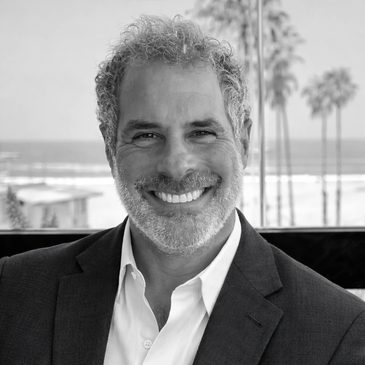
Pacific Palisades resident for over 30 years. Founding Partner of Upfront Ventures, a venture capital firm, with over 30 years of experience investing in and building companies. Former founder and CEO of United Dwelling, one of the most active builders of small-scale residential housing in Los Angeles in 2022.
Has raised over $4 billion in capital across venture and real estate platforms. Responsible for program strategy, capital structure, and execution.

Lee West is President of Uplifters Foundation and a Pacific Palisades resident for over 30 years. He has more than 35 years of entrepreneurial experience across investment, advisory, and operating roles within the asset management and startup communities.
Lee founded Hedge Fund Services (HFS), which provided infrastructure and advisory support to over 1,700 investment firms and incubated more than 200 asset managers, collectively contributing to the creation of over $36 billion in equity. Through HFS and subsequent ventures, he has built an extensive network across financial institutions, private capital, and emerging industries.
Lee currently serves as an advisor and board member to technology startups and nonprofit organizations. At Uplifters, he focuses on capital formation, strategic partnerships, and aligning institutional resources to accelerate community rebuilding.
The Foundation is expanding its governance structure to include independent directors, community representatives, and technical advisors with experience in finance, construction, government, nonprofit management, and community rebuilding.
Governance expansion is underway. Additional board and advisory appointments will be announced as the program launches.
We live here. This program is a direct response to the loss of homes and community following the wildfire.
— Steven Dietz & Lee West
Uplifters Foundation is a California nonprofit public benefit corporation, recognized by the IRS as tax-exempt under Section 501(c)(3). This page answers the questions we hear most often, about who we are, how the program works, who benefits, and how we are governed.
The priority for all of us must be getting people back into homes. If that does not happen, we do not get our community back. The best answer, always, is helping people return to the exact address they lost, and we hope every family who can rebuild on their original lot does so. But that path will not work for everyone, whether because of insurance shortfalls, delays, the cost of construction, the difficulty of managing a multi-year build, or simply age and circumstance. For those families, the realistic choice may be our program or never coming back at all.
And the deeper problem is not who will live in the houses. It is that the houses are not getting built. Last year's surge in rebuilding permits has slowed to a trickle. New permit applications fell from a peak of 142 in December to 45 in June, a drop of more than two thirds, with no sign of leveling off.
| Month | Permits Submitted |
|---|---|
| Mar 2025 | 30 |
| Apr 2025 | 45 |
| May 2025 | 73 |
| Jun 2025 | 91 |
| Jul 2025 | 106 |
| Aug 2025 | 111 |
| Sep 2025 | 115 |
| Oct 2025 | 113 |
| Nov 2025 | 103 |
| Dec 2025 | 142 |
| Jan 2026 | 68 |
| Feb 2026 | 62 |
| Mar 2026 | 71 |
| Apr 2026 | 78 |
| May 2026 | 69 |
| Jun 2026 | 45 |
| Total since fire | 1,322 |
Source: LADBS permit data (data.lacity.org), new single-family dwellings in the Palisades fire area, submitted since January 7, 2025.
Of the 3,665 completely destroyed single-family parcels, only 1,322 had any new-home permit activity as of July 1. That leaves 2,343 parcels where nothing is happening. Our program is built to help about 60 families return by buying a completed home at an attainable price instead of managing a build themselves.
Across eighteen months of community meetings, the Palisades Recovery Coalition heard the same priority that drives us. As their June 2026 report put it, everyone who wants to return should be able to return. We do not speak for the Coalition and they have not endorsed us.
Yes. Uplifters Foundation is a California nonprofit public benefit corporation with IRS 501(c)(3) tax-exempt status (EIN: 33-3761515). We are governed by an independent Board of Directors, and our founding documents, IRS determination letter, and the City authorization for our financing are available in the Public Documents section of this site. We are a single-purpose organization: rebuild a set of attainable homes for displaced Palisades families, then complete our work. We are not a perpetual institution and we hold no equity in anything.
No one profits from home sales, and there is no equity in a nonprofit to profit from. The Board of Directors is independent and receives no compensation of any kind. The Foundation will have paid employees doing this work full time, as any organization of this scope must. Their compensation must be approved by the independent Board and is disclosed publicly every year in our Form 990, which anyone can read. If you want a single document that holds us accountable, that is the one.
The program is financed with tax-exempt revenue bonds. That money is a loan to the Foundation, for a defined term, that must be repaid with interest. It is not a pot of funds to hand out, which is why direct grants to individuals are not possible. Critically, the Foundation never touches the money. It is held by an independent trustee who disburses it only as lots are purchased and construction draws are made, under the terms of the bond indenture. Any rent or sale proceeds go back to that same trustee, who repays the bonds. Anything left over after the bonds are repaid must be contributed to the community, as directed by the Foundation's independent Board. No founder, director, or employee controls these funds or can divert them.
No, and we want to be straight about that. We cannot contribute to rebuilding a family's home on their own lot. Organizations like Habitat for Humanity, SBP, and owner-directed rebuild programs serve that need, and we support their work. We considered a similar model when we began, but the reality of financing through bonds rather than donations made it unworkable for us. No single model fits every family. Ours is built for the families the other models do not reach.
If you have already decided to sell, we may be a buyer. We purchase lots at fair market value, on ordinary terms, through normal escrow with title insurance. We do not solicit anyone to sell; state law prohibits it, and it is not our intent. We are simply one more buyer in a market where lots are already being sold. To start a conversation, write to info@upliftersfoundation.org.
Selling your lot is a significant and personal decision, and you should get your own independent advice before making it. A few things worth weighing: whether you intend and are able to rebuild yourself, the tax consequences of a sale in your specific situation, any Proposition 13 or disaster-relief provisions that may apply to you, and what comparable lots in your area have actually sold for. We are glad to be transparent about our offer and our process, but we are not your advisor, and we will always encourage you to consult your own.
Completed Heritage Homes will initially be offered to displaced Palisades families before being listed more broadly. The buyer is unlikely to be the person who sold us the lot. We intend to require a three to five year residency commitment, because these homes are meant for people making the Palisades their home, not for anyone looking to flip one. If you are a displaced Palisades resident interested in returning, write to info@upliftersfoundation.org to be kept informed as homes become available.
We cannot give a fixed price yet, and we would rather say that honestly than invent a number. We will not know our true build cost until we own a lot and take competitive contractor bids, and we cannot know the market 30 months from now. What we can share: land in our target areas has traded from roughly $1.2 million to $1.9 million, and we expect all-in cost, land plus construction, somewhere in the range of $2.8 million to $3.5 million. What matters most is the principle behind the price. Whatever the difference turns out to be between our cost and the eventual sale price does not go to us. It is returned to the community. The right sale price is a genuine and difficult question, balancing a lower price for the buying family against a larger contribution back to the community, and it is exactly the kind of decision our independent Board will weigh in the open.
Because the financing and construction methods are different. Our cost advantage comes from a few real sources: lower cost of funds through tax-exempt financing; no income tax, limited property tax during construction, and possibly limited sales tax on materials; economies of scale from building roughly 60 similar homes at once, in design, purchasing, and supervision spread across many projects rather than one supervisor per job; repeated use of a small set of designs; and no change orders, because there is no individual client revising the plan mid-build. Above all, there is no developer profit layer. On a like-for-like design, we expect to deliver finished homes for 10% to 15% below what a general contractor charges on a one-off basis. The Palisades Recovery Coalition's June 2026 report records resident support for aggregated construction efforts, shared architects and labor pools as a way to bring costs down, which is exactly the efficiency our scale is meant to create.
A speculative developer buys a lot, builds the largest home the market will bear, sells it to the highest bidder, and keeps the profit. We do the opposite on every count. We build homes of about 2,600 square feet, deliberately smaller and lower in cost than the roughly 3,135-square-foot average of what is being permitted around us, and we add no density. We offer the home to displaced Palisades families first, with a five-year residency commitment. We keep no profit; any excess returns to the community. The Palisades Recovery Coalition's June 2026 report warns that failing to build attainable housing will accelerate the mansionization of the Palisades, narrowing who can return. We are the opposite of the outside developer that concern points to, and beyond the 60 families who move in, the whole community benefits as lots that would sit empty become homes and neighborhoods are reestablished.
Our bylaws, including the full conflict of interest policy, our IRS 501(c)(3) determination letter, and the City authorization record are available in the Public Documents section of this site.
We are all neighbors who want the same thing, a Palisades that comes back whole. The fastest way there is to share what each of us knows, ask hard questions, and make decisions based on facts rather than fear. We welcome scrutiny, and we would rather earn trust than ask for it. We would welcome the chance to present our work to the Palisades Recovery Coalition, the Palisades Community Council, and any other community group, and to discuss how our efforts and theirs can complement each other.
For questions, or to invite us to present to your group, please write to info@upliftersfoundation.org.
Core legal and governance documents are posted here for public review. These records reflect the Foundation's structure, charitable status, and formal government recognition.